Vintage Thanksgiving Postcards by Samuel L. Schmucker
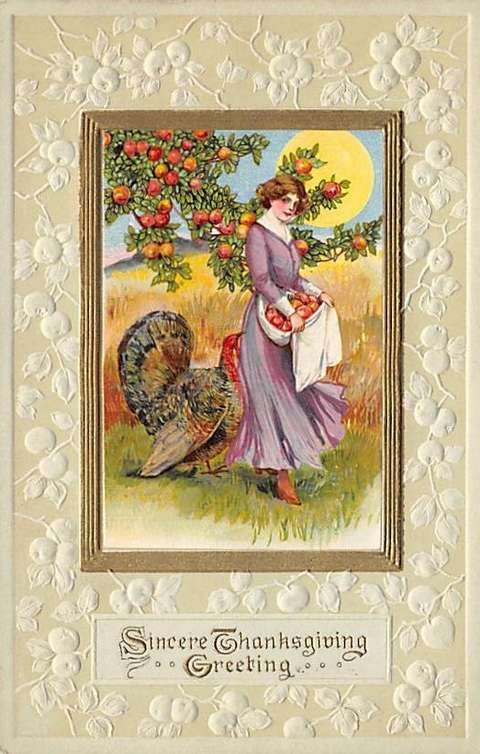
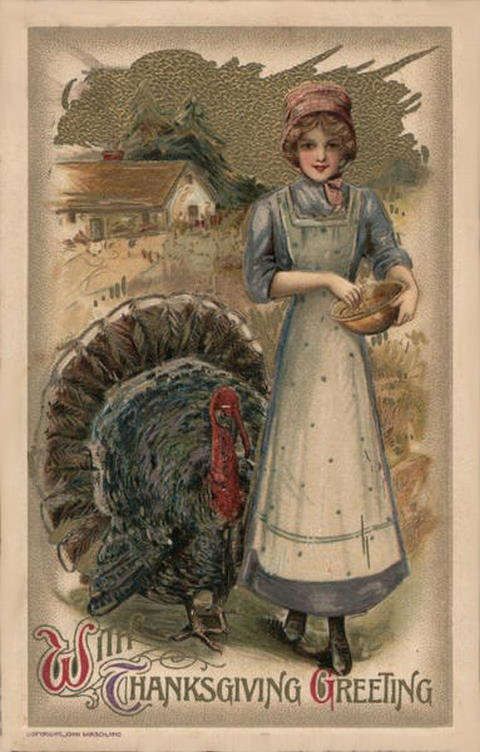
Samuel Loren Schmucker created tons of Thanksgiving cards. While he worked on different themes, you'll probably notice the look of the girl or woman on the card only slightly differs. The reason is simple. His wife, Katharine Rice, was his favorite model, and her image inevitably became part of the characters on postcards. Modern housewife, a squaw, pilgrim's housekeeper, ... - it's (almost) always Kate.
Schmucker's Thanksgiving cards are interesting for many reasons. One of the most important ones is definitely a chance to see how people not so long ago (a bit over a century) experienced the most popular family holiday in the USA, which is today too often remembered only by crowds, bad weather, and bloated stomachs. We can even say our article about Samuel Schmucker's Thanksgiving greeting cards should be read as a sort of time machine, a journey from the first Thanksgiving to commercialization with a roasted turkey as the only goal of the fourth Thursday in November.
There is no clear consensus about the first Thanksgiving, although they associate it with Pilgrims, Mayflower, and Autumn 1621. About 90 members of the Wampanoag tribe supposedly joined 52 English settlers in the area of today's Plymouth, Massachusetts. They had some meat, fruit, and veggies, so they threw a feast. It was a celebration of life. The winter was coming, and typically, less than half of the settlers survived each winter. Working together improved the chances of both groups.
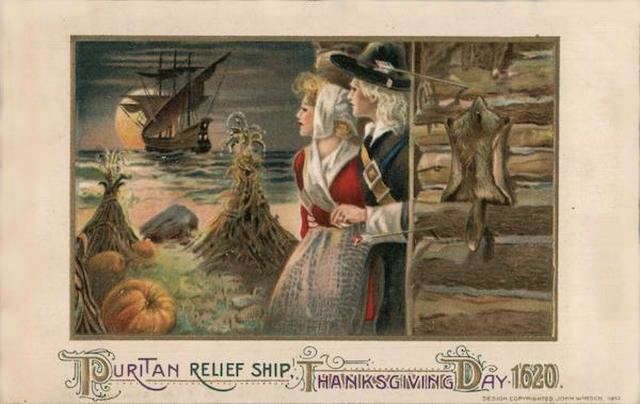
American Indians were way more skilled than settlers. They knew what was edible, what had health benefits, and what was poisonous. They also knew where and where to hunt and what kind of crops could be grown. Most important of all, they were willing to share their knowledge with foreigners.
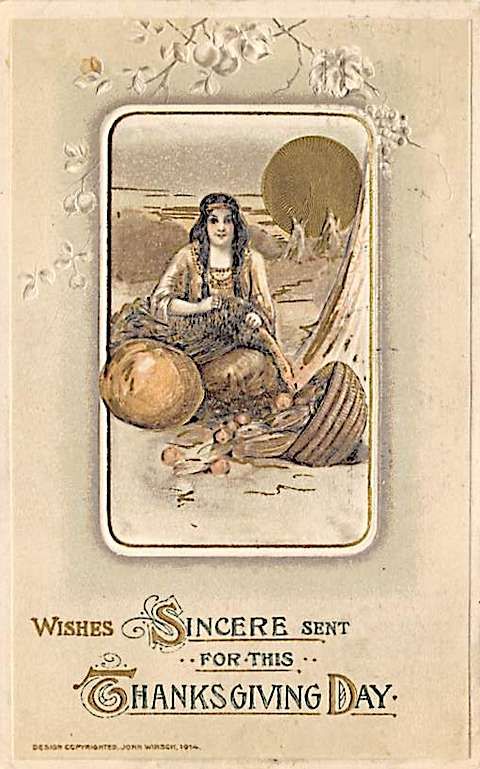
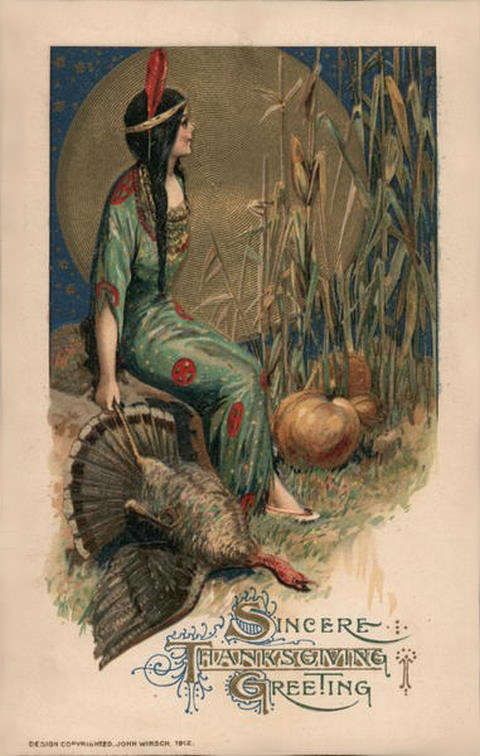
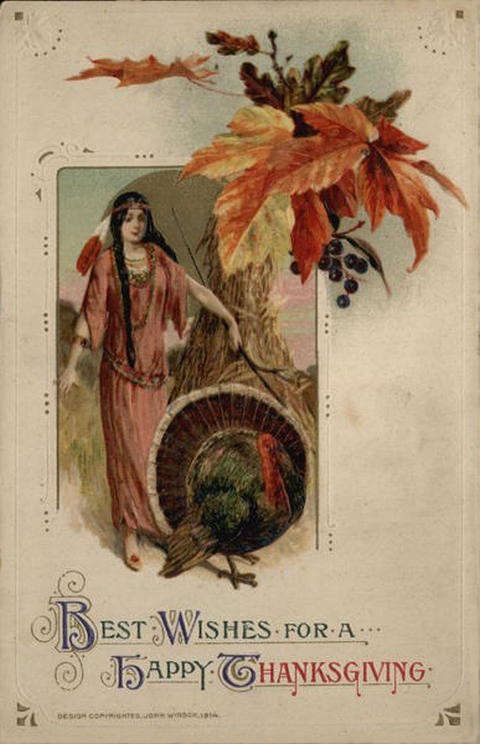
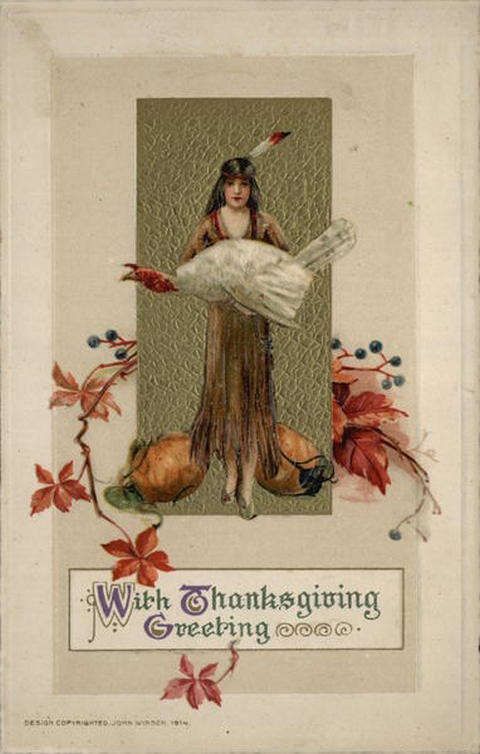
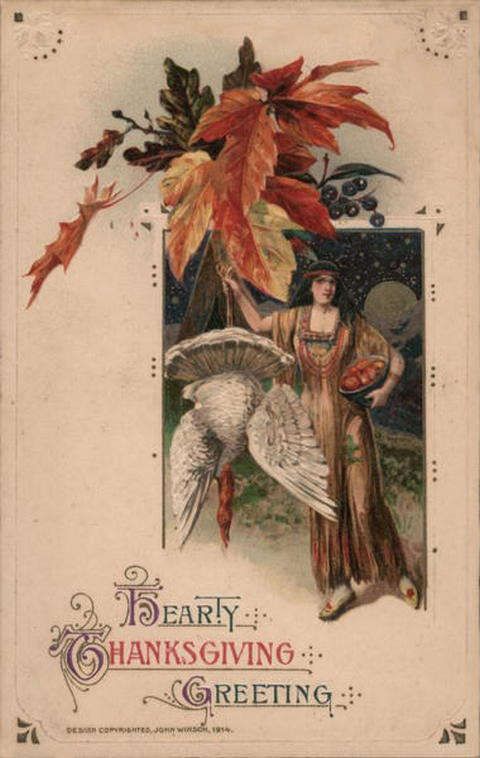
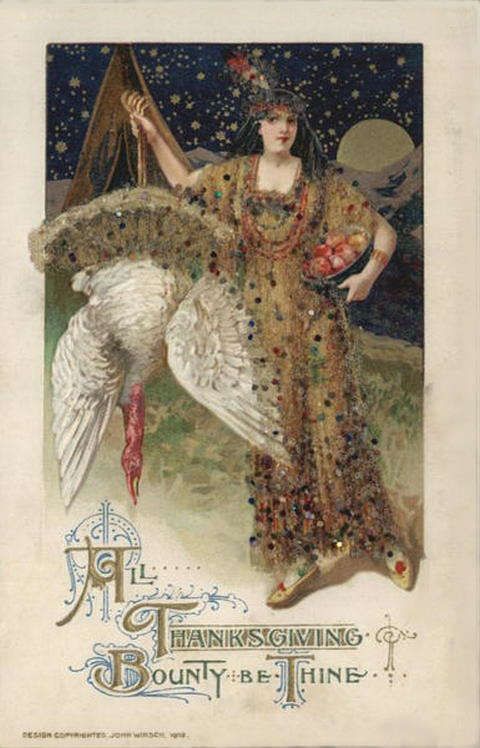
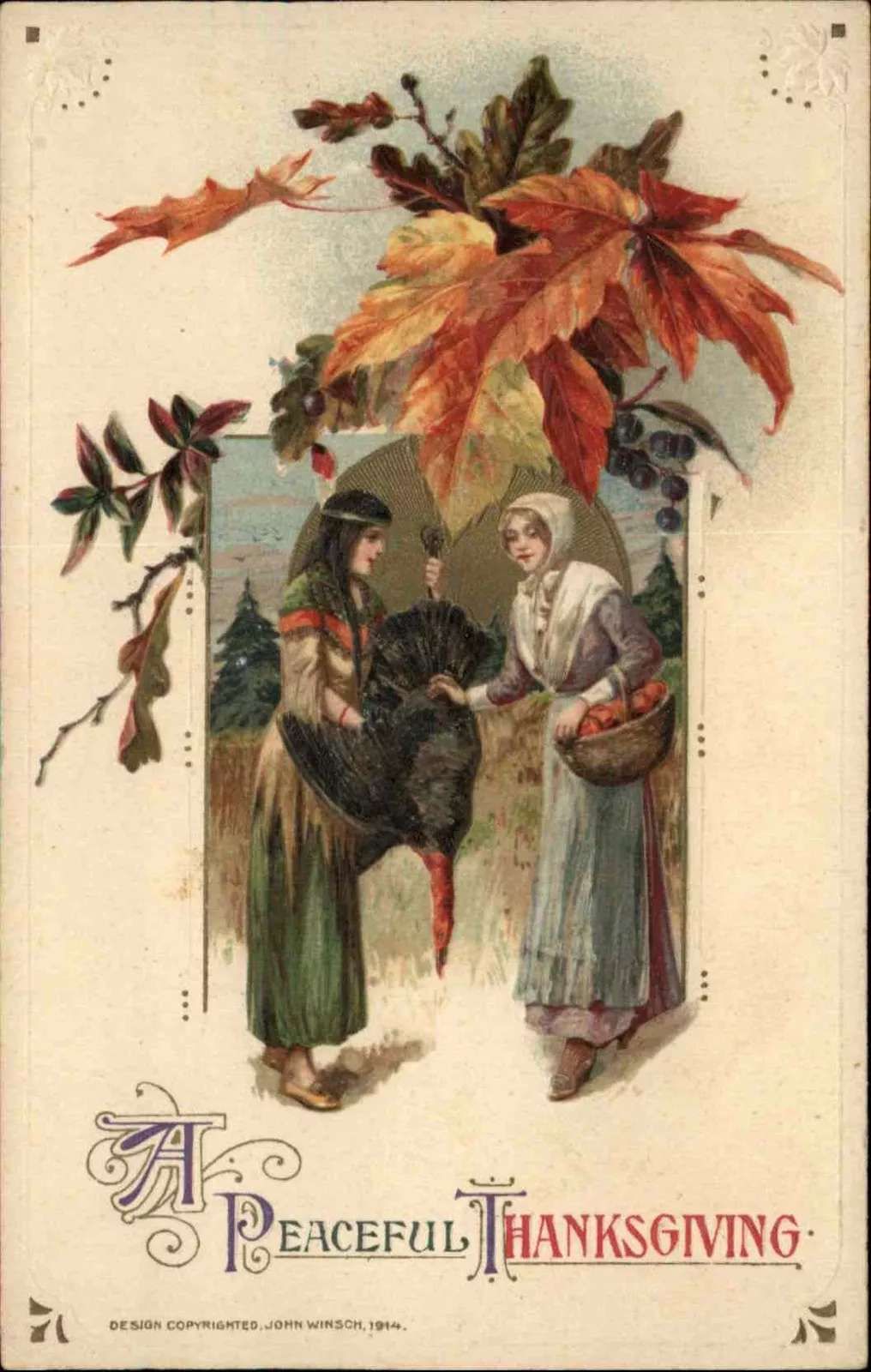
Thanksgiving is closely related to the end of the harvest season. It's actually pretty similar to Halloween. While Halloween is focused on the end of the warm season, Thanksgiving accepts the beginning of coldness. In both cases, stocks are crucial for survival. It's interesting to note how the Pagan perception of reality transferred into shopping holidays with essentially the same result - filling one's stocks.
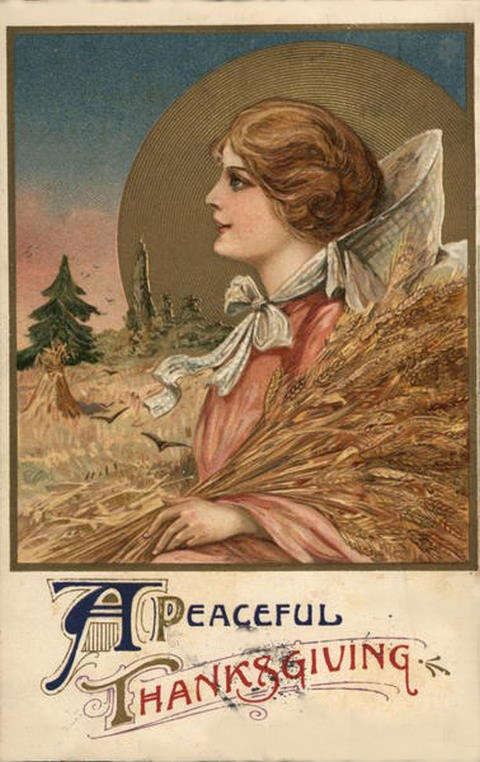
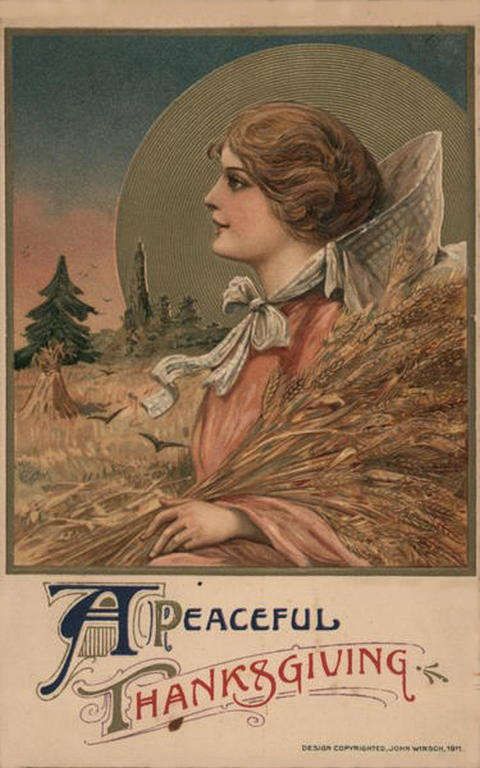
Did you notice the difference? One of the Thanksgiving cards above has a copyright notice, and the other does not.
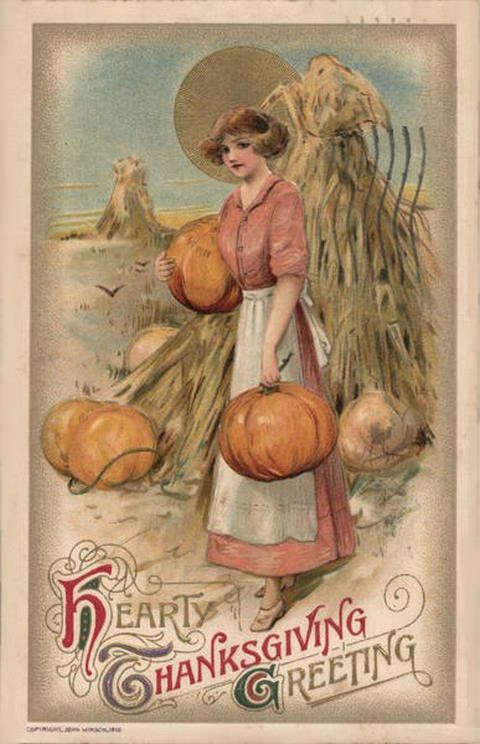
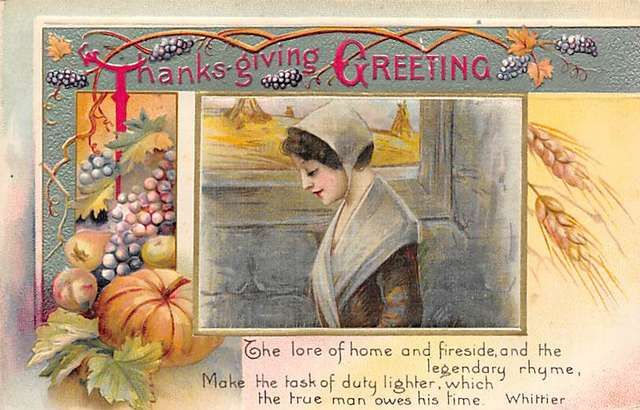
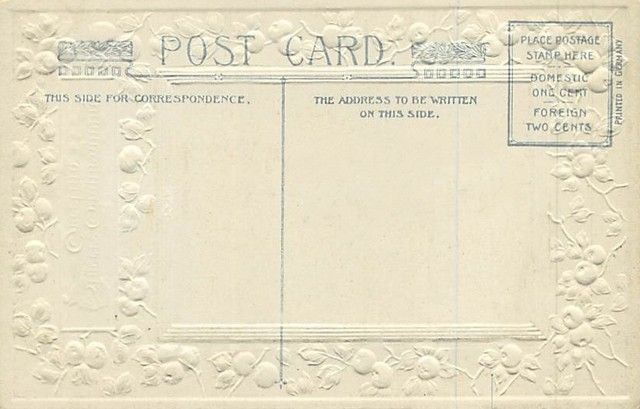
The back of the card, in this case, clearly shows the relief print, which makes the card more luxurious and unique.
The turkey became the center of Thanksgiving dinner much later. There was meat on the first Thanksgiving (it was not called so then, of course) table, of course, but it was very likely venison and wild birds, anything they were able to catch.
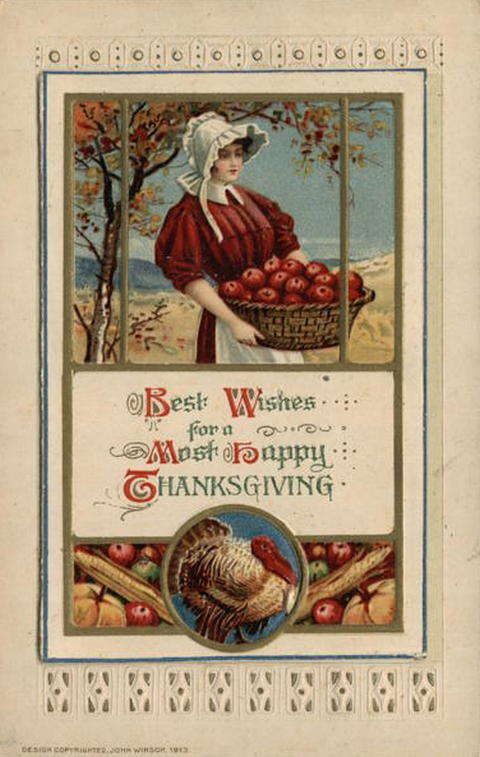
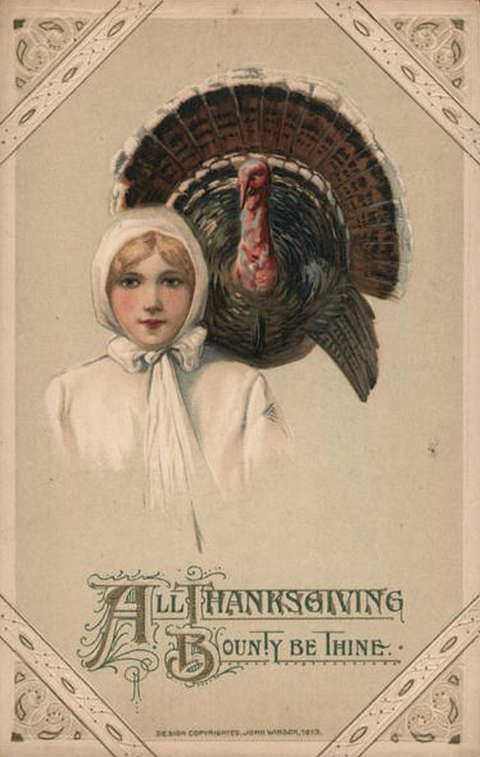
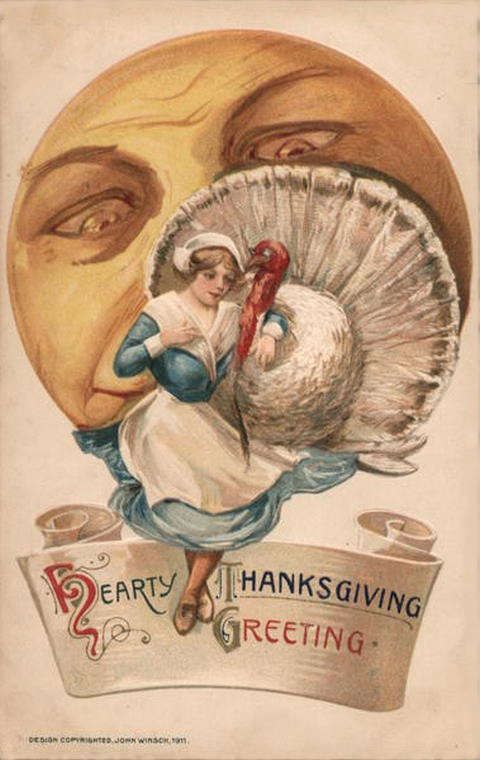
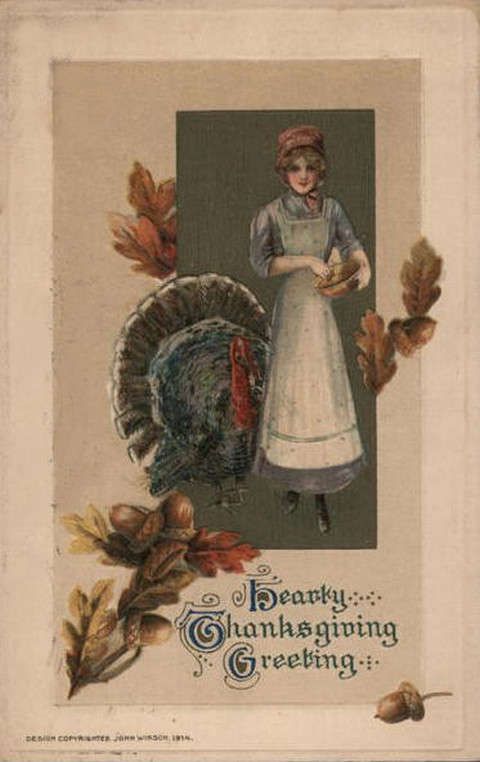
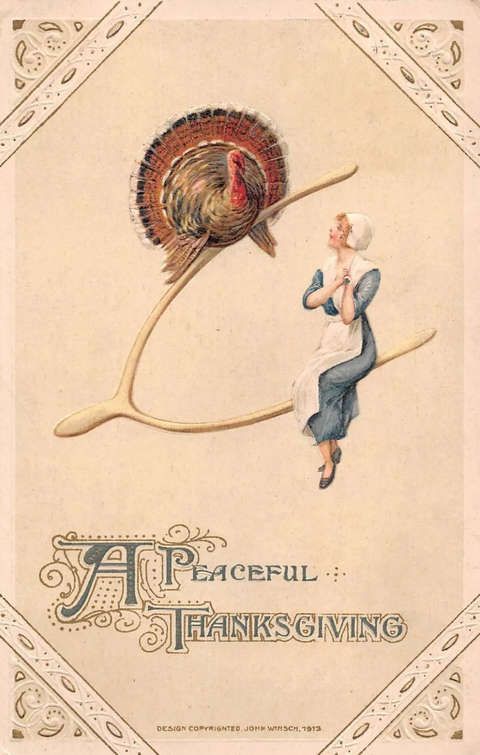
As you can see below, the same postcard designs were often used in different ways to expand supply. Sometimes, an addition of a decorative border satisfied the customer, who was willing to pay more for something new and special.
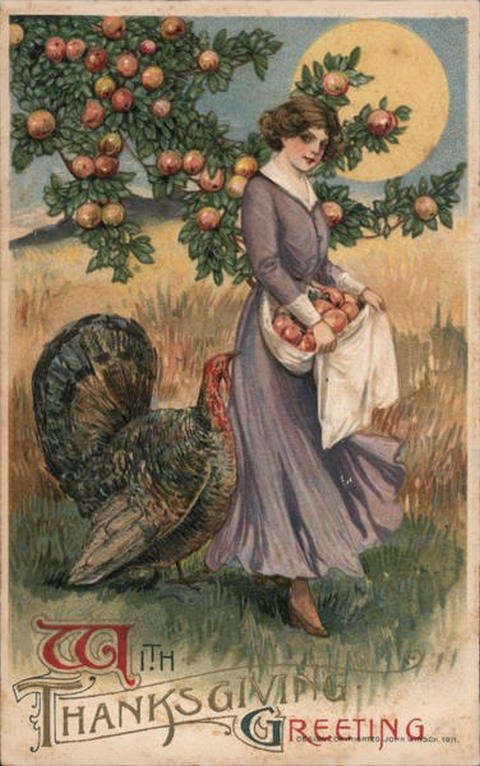
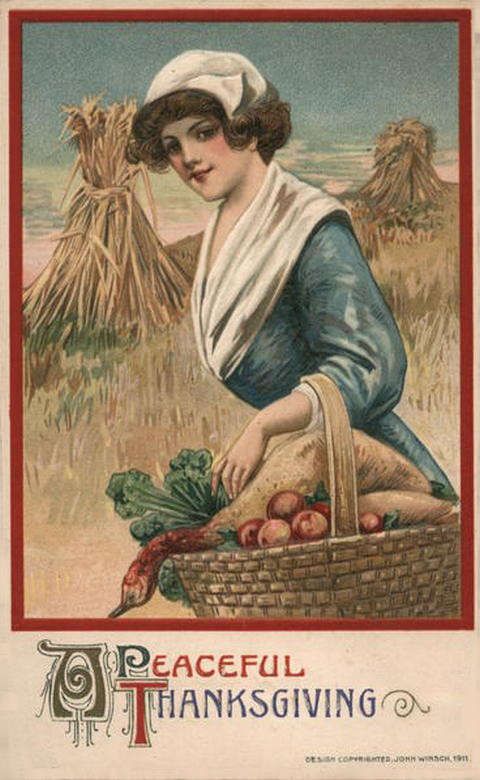
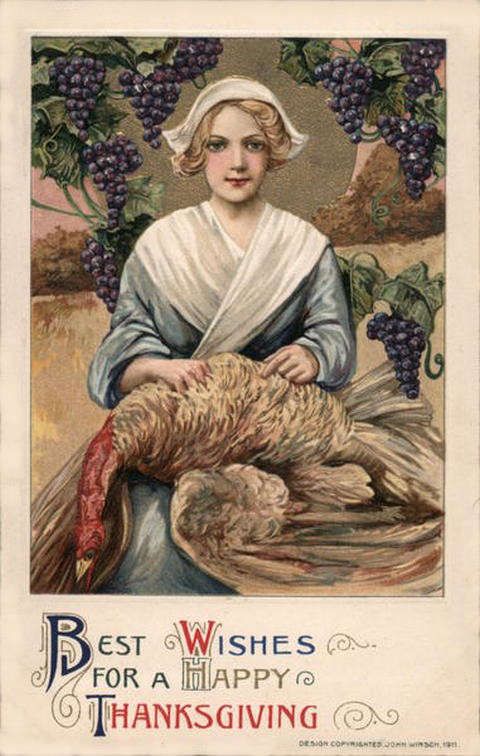
The scenes with dead turkeys are not popular in today's designs. We don't want to think about how meat comes on our plates. Instead, there's even a show of presidential pardoning. Those turkeys, by the way, are just like other industrially farmed turkeys, too fat and ill to survive more than a few additional months.
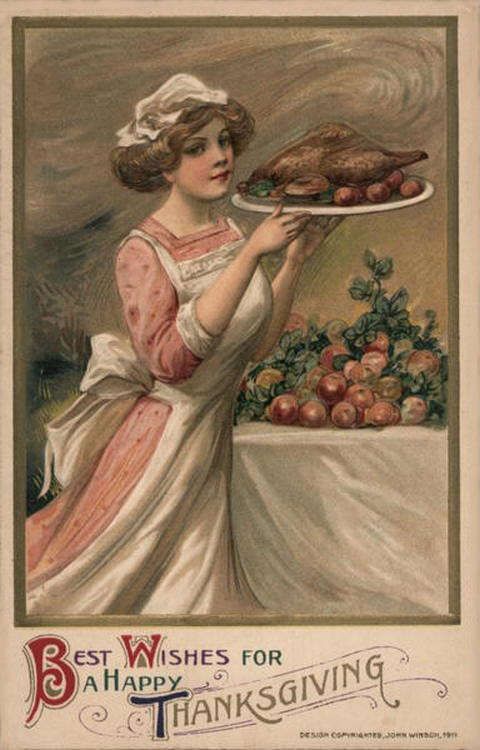
From turkey to dinner! This scene looks much more familiar, right? While most people don't really think about Native Indians, harsh winters, survival, and similar stuff, turkey instantly pops into one's mind. With stuffing and sides, obviously.
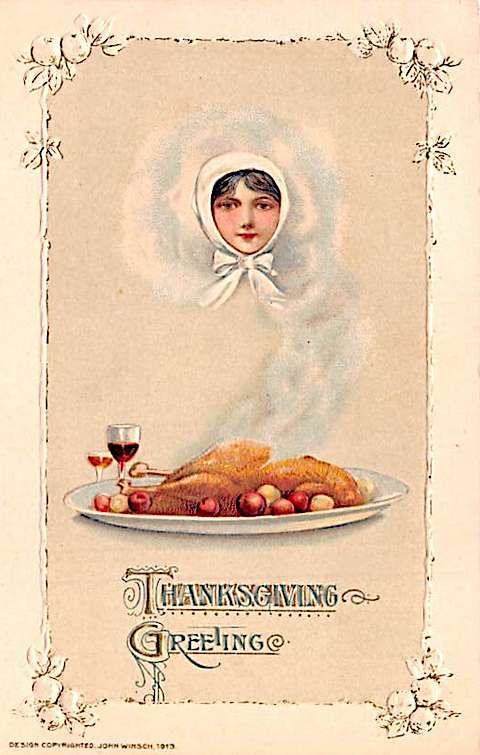
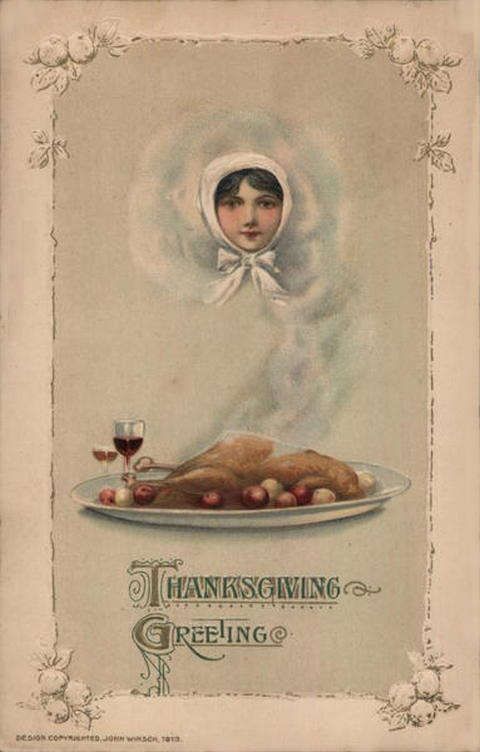
The same design was often printed at different companies. This is probably the reason why the Thanksgiving postcards above differ so much in their colors.
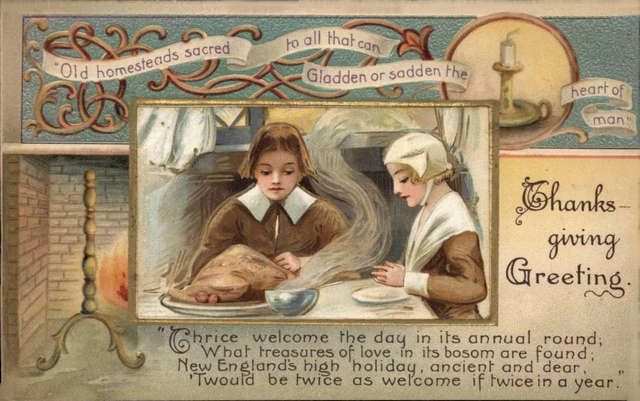
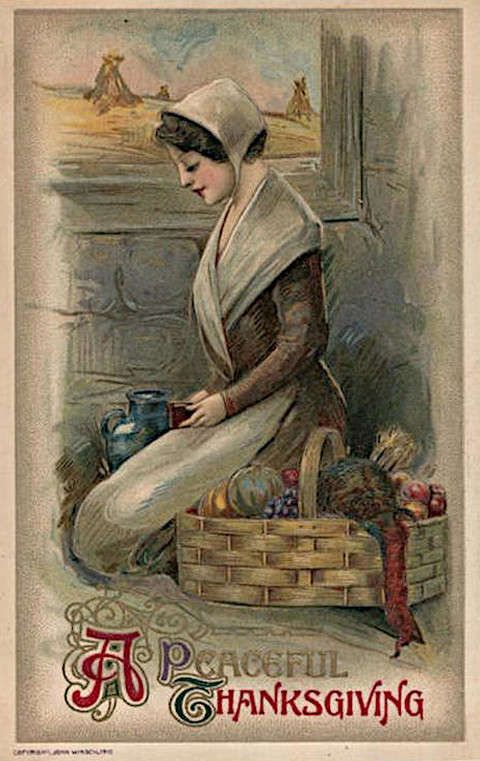
There's another almost forgotten angle in today's Thanksgiving. Pilgrims went to America for religious reasons. The surviving ones thanked God for their luck. Samuel L. Schmucker didn't miss the opportunity to show a few examples of prayer.
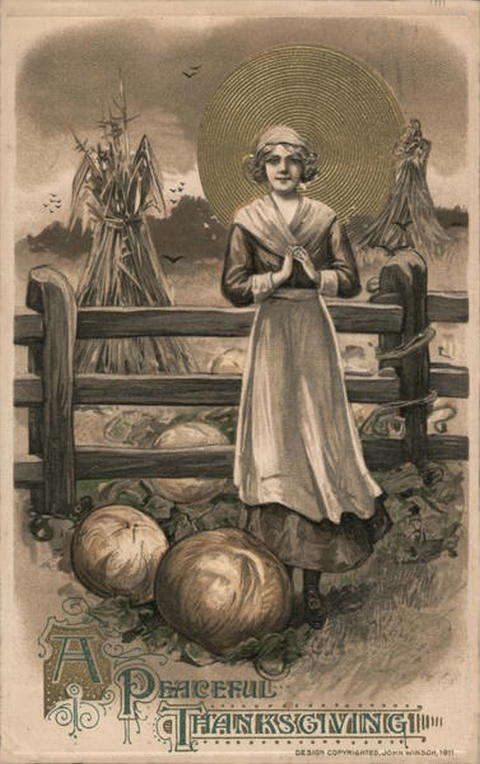
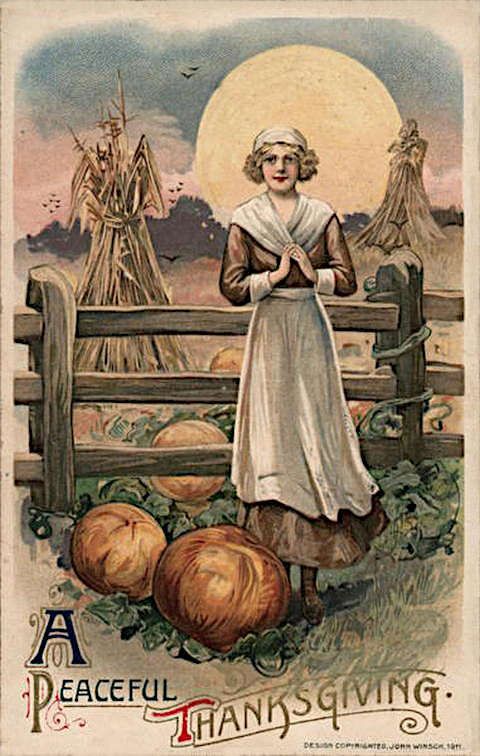
Yes, the same design in two different versions, again. Colors make a world of difference. Have a Happy Thanksgiving!