St. Patrick's Cards by Samuel Schmucker
St. Patrick's Day is an Irish national holiday with global popularity. On 17 March every year, millions of people wear green, put on characteristic hats, and spend at least half an hour grabbing a beer in a (preferably) Irish pub. At least seven rivers in the USA are dyed green for this occasion. There are even events with thousands of participants who are painted green, which, of course, is not the only symbol of St. Patrick's Day.
One of Saint Paddy's traditions is sending St. Patrick's greeting cards. Obviously, they are dominated by the color green. It's also interesting to note that the most popular symbols on these cards don't have anything in common with St. Patrick's mythology. For instance, there is no card with St. Patrick and snakes. They are inspired by Irish history. And history makes us human. For this reason, we have made a selection of vintage postcards by Samuel Schmucker, one of the most collectible postcard artists, whose approach to this Irish holiday was almost identical to his other projects related to popular holidays: Art Nouveau-influenced style with his wife as the model for almost all postcard designs, numerous details, and a pinch of luxury.
Old-Fashioned St. Patrick's Cards with Traditional Elements
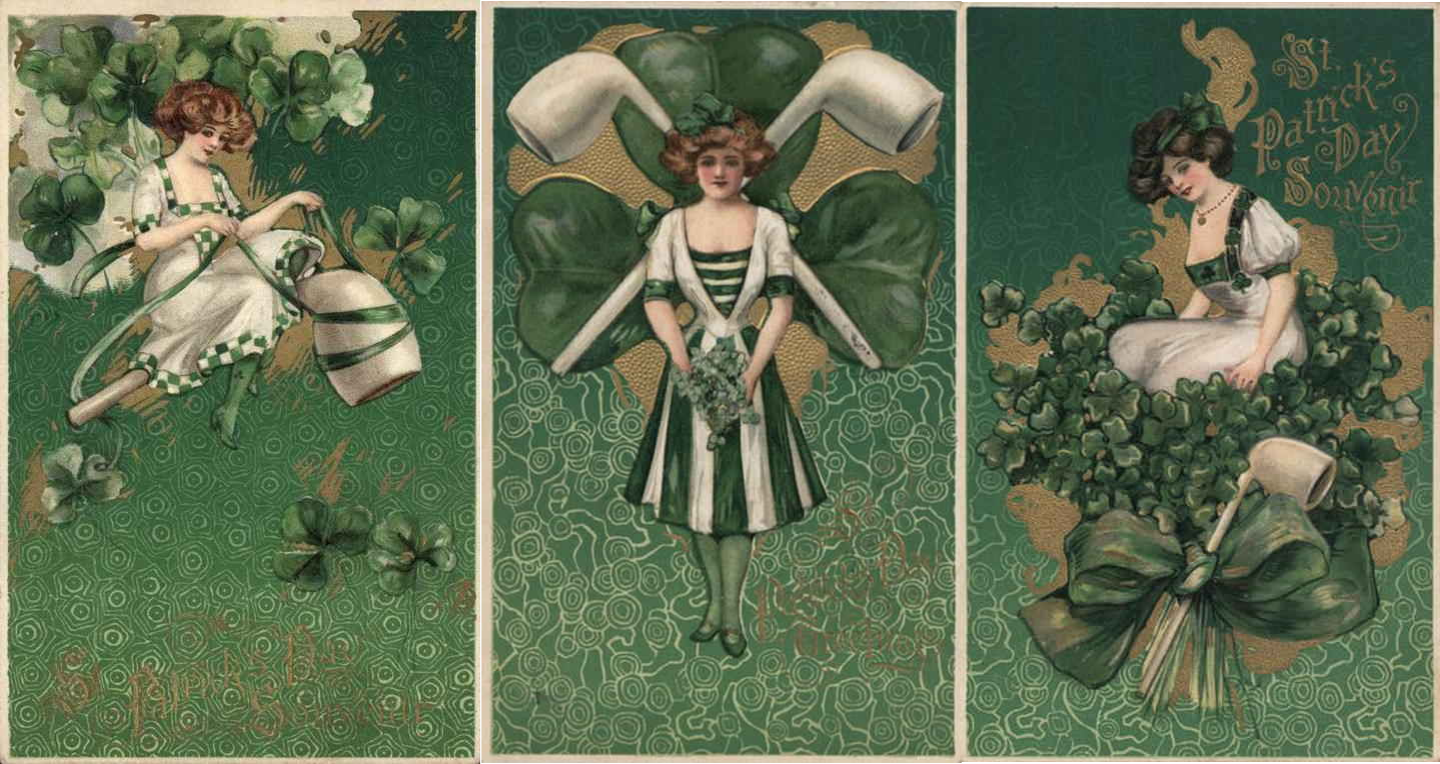
A pipe is a part of tradition on 17 March. Smoking tobacco with pipes is deeply ingrained in Irish heritage. Smoking was for centuries a popular pastime and an integral part of socializing, but there is another aspect to it as well. Irish pipes became one of the symbols of Irish craftsmanship. The industry was so influential that even leprechauns, mythological beings with nearly two thousand years of history, began smoking pipes, despite tobacco's arrival in Europe only in the 16th century.
Here are three Samuel L. Schmucker's St. Patrick's greeting cards with pipes, in both cases used as decorative elements with magical connotations.
Harp
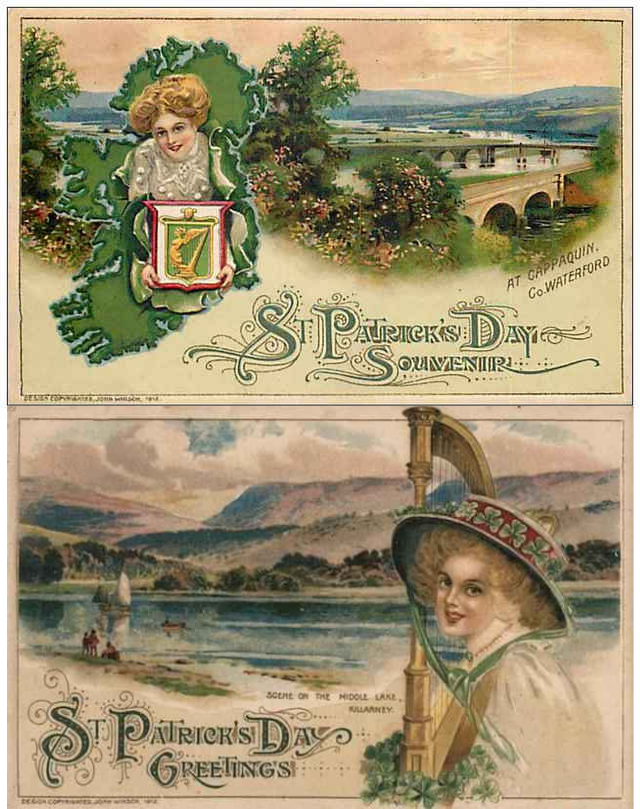
One of the most notable Irish symbols is a harp. It's a symbol of Irish identity, an inescapable part of their history, and an element of countless brands associated with Ireland, from Guinness to Ryanair. The harp has over one thousand years of history in Ireland and represents Irish heritage. We can find it on old Irish flags and first minted coins. It is almost impossible to design a few greeting cards for St. Paddy's without somehow incorporating it into the project.
Samuel Schmucker, who always loved to incorporate gold colors into his images, drew a golden harp as a symbol of hope, accompanied by another Irish symbol, the shamrock, which represents good luck. Gold and green always make a great combination. For perfection, only one element more is needed: his wife and model Katharine Rice Schmucker.
You'll notice that Schmucker used the same design for postcards with different orientations. Here are both images in portrait orientation, this time as embossed (relief printed) St. Patrick's cards. For good measure, we added another design.
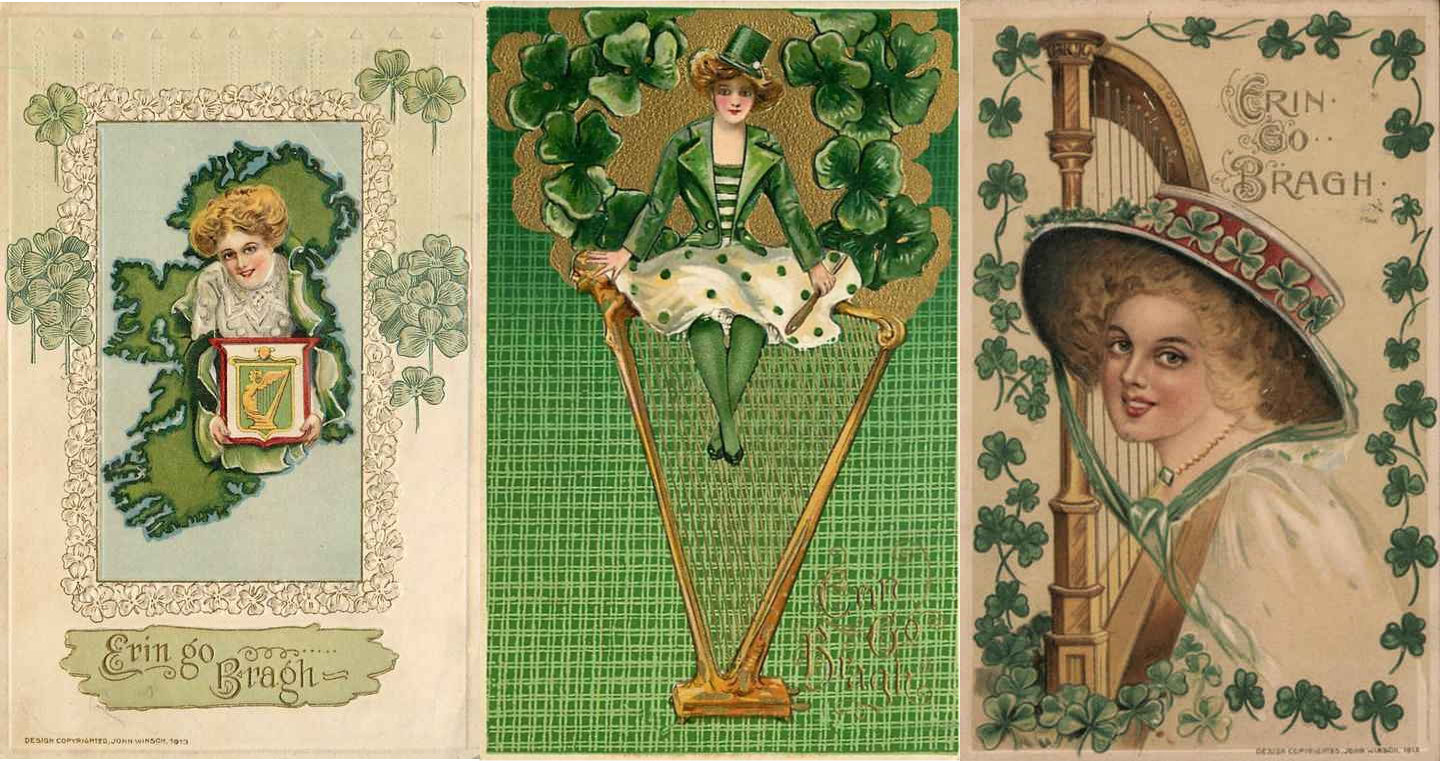
Now, you may ask a standard question: what does Erin go Bragh mean? In short: Ireland forever!
Piglets
We are not done with Irish symbols used on Saint Patrick's Day. A pig, or a piglet, a symbol of abundance, holds an important place in Irish history, and a meal with pork is a traditional part of this occasion. Of course, gold and green dominate the Schmucker's greeting card designs. Even the skin has a golden shine. So far, you have also probably noticed his love for all kinds of decorative borders.
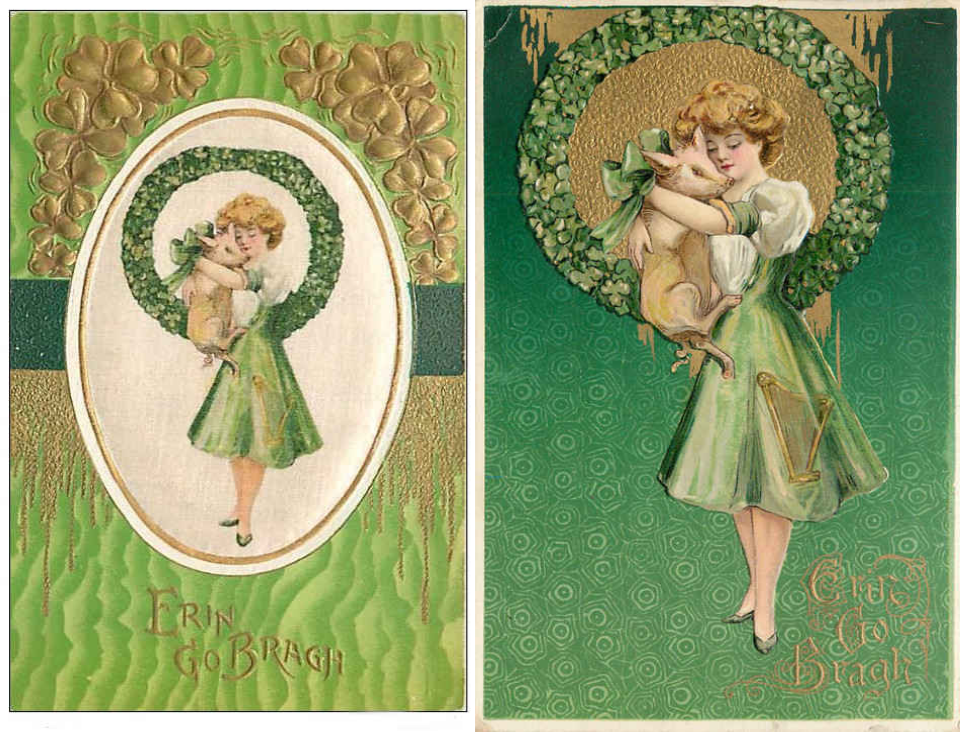
There is another important detail about the last two featured cards above. They were printed on silk. Silk is not a standard material for greeting cards, but in a collectible environment, everything is allowed. The same designs were often available on different media: paper for regular customers, embossed versions for more affluent ones, and silk, metal plates, and other materials for die-hard collectors. These cards were created in the golden era of postcards, after all!
Vintage St. Patrick's Cards on Silk
Traditionally, silk postcards were used for sentimental occasions. People sent them to dear ones; numerous women created unique silk greeting cards for their husbands and brothers during World War 1, but handmade cards were slowly replaced by machine-printed greeting cards where the producer not only increased profit due to the higher number of prints but also had the possibility to vary the same design a bit and instantly improved the profit margin by only paying the designer once.
These are Schmucker St. Patrick's Day cards on silk:
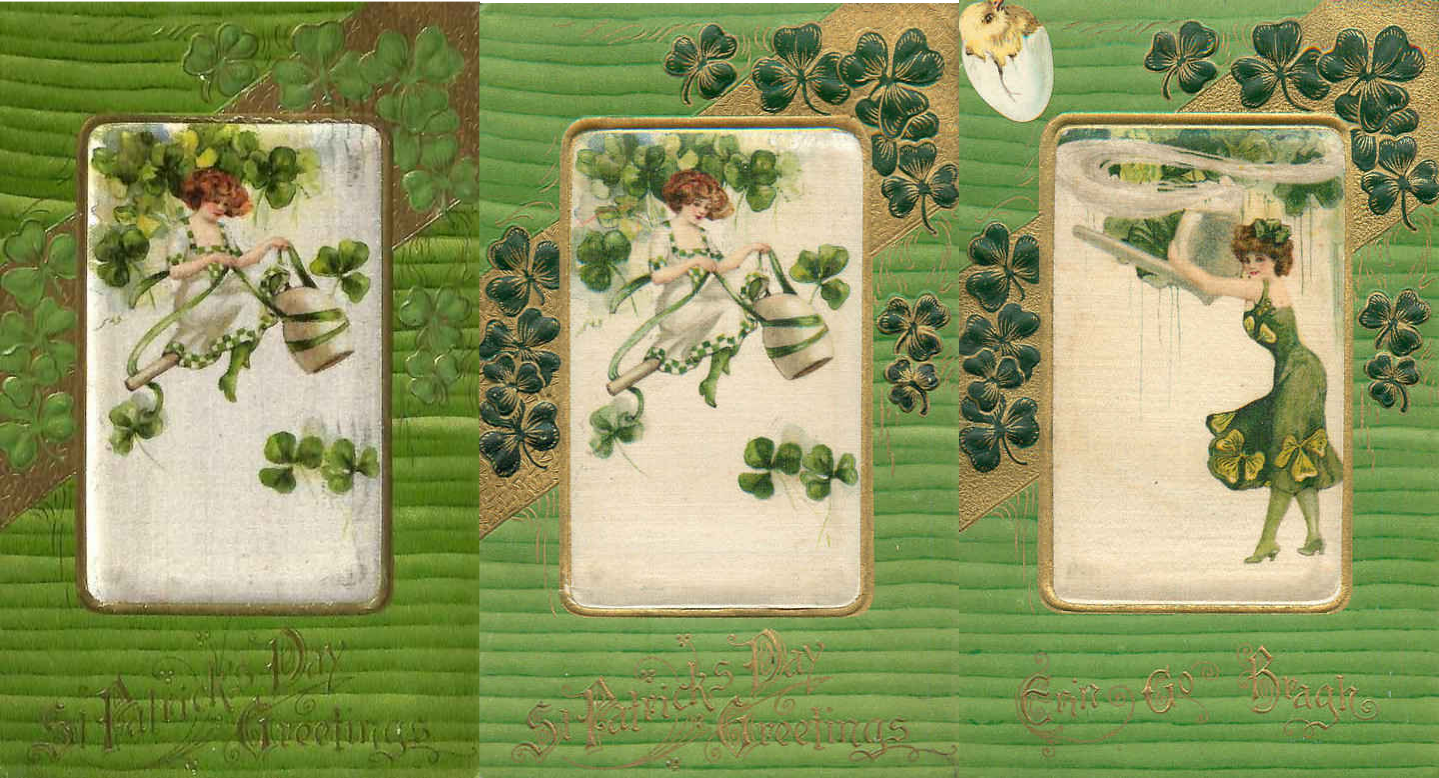
Again, we are dealing with the same design in two variations. And again, green/gold combination, shamrocks, pipes, and a pretty redhead girl. There's also a surprise: a chicken hatching out of an egg. What does a chicken do on the St. Patrick's card? Poultry, mostly roosters, are also part of Irish tradition, although not so widely recognized as some other symbols. In short, a chicken is associated with fertility and good luck, similarly to a shamrock. It's a bit more casual and humorous than a leprechaun, for instance, which is seen in witty phrases like 'cluck for luck' or 'rub my feathers for good luck.'
If you think that silk was the ultimate twist in vintage greeting cards for St. Patrick's Day, think again. We have one more original design to exhibit.
St. Patrick's Memory Cards
Greeting cards can have quite complex designs. They can be made of different materials, with inserts and movable parts, and, of course, they can come in packages with appropriate envelopes. Here is another set of two Schmuckers postcards for St. Valentine's Day. They are both folding cards. We'll show the front page of both and the inside of one of them.
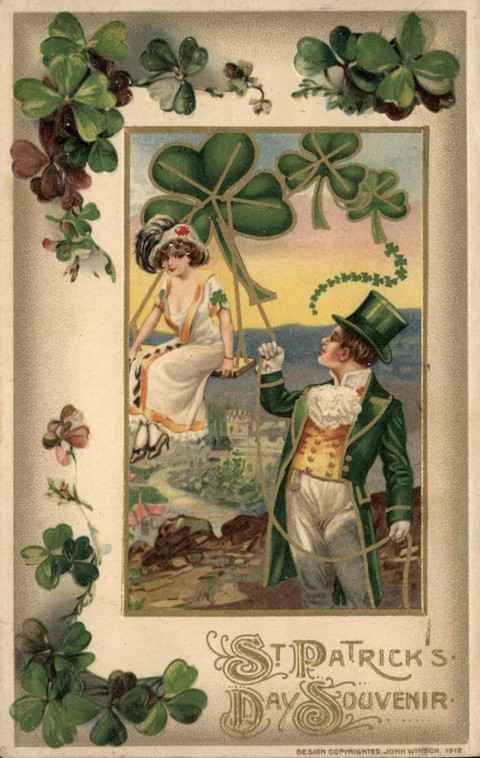
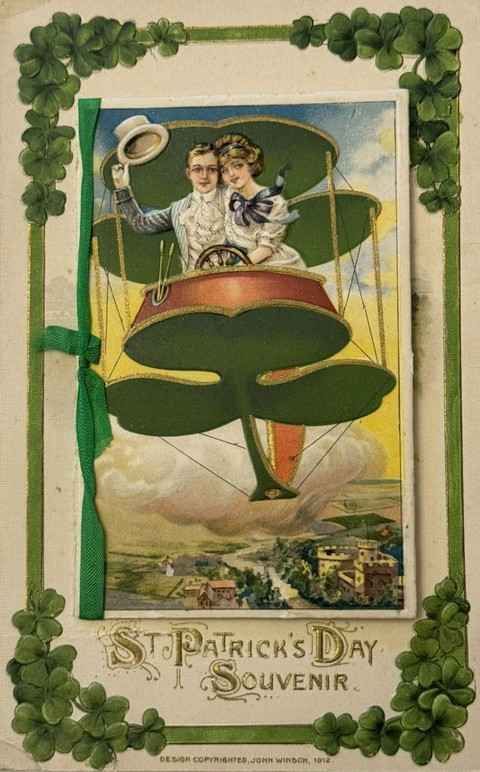
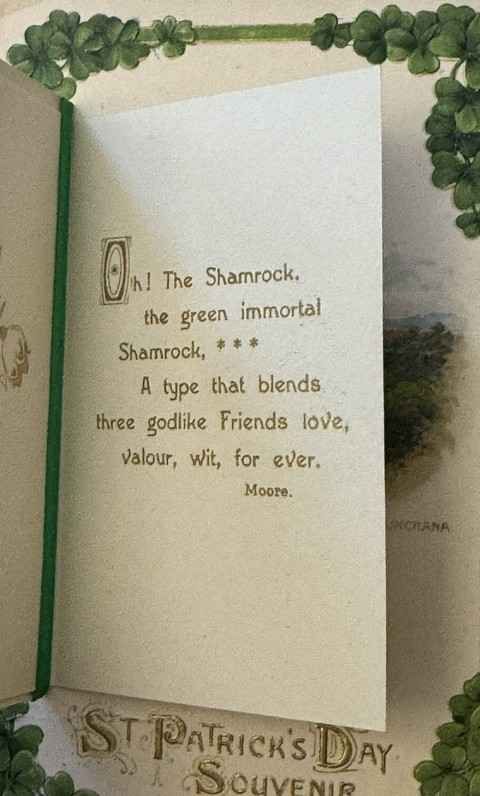
With a set of so-called memory cards for Saint Patrick, we end our journey into a creative world of Samuel Loren Schmucker. If you are interested in the subject, don't miss St. Patrick's cards by Ellen Clappsaddle. Share your findings with the world and keep the legacy of vintage masters alive!